
 Français
 English
 Español
 Italiano
 Deutsch
 Nederlands
 Português PT
Reference: MT-REF-326
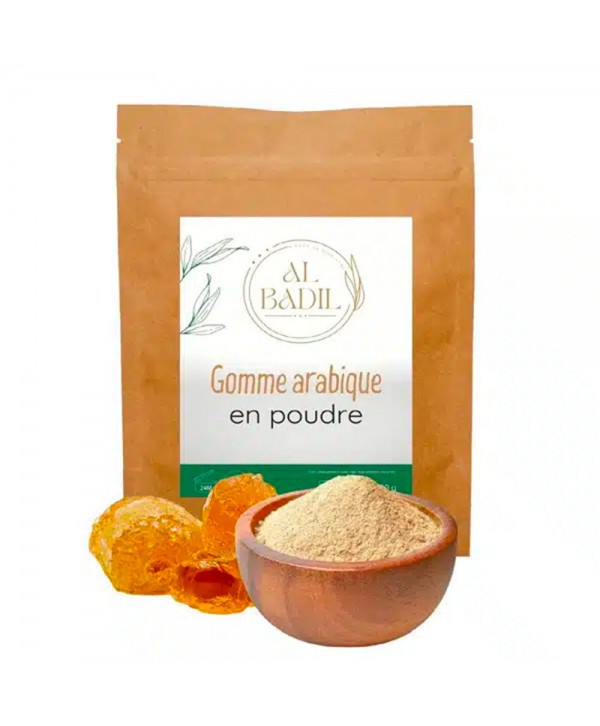
Gum arabic is a natural product with a wide range of uses and benefits. Used for centuries, this substance—derived from the trunks and branches of trees such as the Senegal or Seyal—has proven popular in both the food and pharmaceutical industries. This article explores in detail how to purchase, the benefits of, and the uses for gum arabic.
You can buy gum arabic at various types of stores. You can find it at:
Stores specializing in natural or organic products
Pharmacies and drugstores
Online on websites dedicated to selling dietary supplements and culinary ingredients
When purchasing online, it is recommended that you check the seller’s reputation and read customer reviews to ensure you receive a high-quality powder.
Before finalizing your purchase, there are several criteria to consider:
Purity: Make sure the gum is 100% natural and free of chemical additives.
Source: Choose certified products from recognized species such as Senegalese acacia.
Organic certification: Organic gum arabic often guarantees better quality and food safety.
Gum arabic is rich in soluble fiber, promoting good digestive health. It helps regulate bowel movements and may be beneficial for people suffering from chronic constipation.
Additionally, this natural fiber helps balance gut flora by stimulating the production of beneficial bacteria essential for the proper functioning of our digestive system.
For those looking to manage their weight, gum arabic can be a valuable ally. Its emulsifying and thickening properties increase feelings of fullness, thereby reducing excessive calorie intake.
This natural agent is often used in dietary supplements designed for weight loss, as it helps reduce appetite while providing beneficial nutrients.
Gum arabic also possesses anti-inflammatory and antioxidant properties. These characteristics make it a valuable additive for strengthening the immune system and fighting free radicals responsible for cellular aging.
In cooking, gum arabic is known for its gelling and stabilizing properties. It serves as an emulsifier in many food products, improving the texture and consistency of various preparations:
Gum arabic also has a place in the cosmetics industry. Thanks to its viscoelastic properties, it is used in skin and hair care formulations:
In the pharmaceutical sector, gum arabic is used as an excipient in various medicinal formulations. Its colloidal properties allow for the creation of homogeneous suspensions, facilitating the administration of certain medications in liquid or solid form.
In addition to its practical uses, gum arabic plays a crucial role in the arts. It is used as a binder for pigments in inks and watercolors, providing perfect consistency and optimal preservation of pictorial works.
You can easily incorporate gum arabic into your daily life:
Homemade baking: Add a small amount of powdered gum arabic to improve the texture and lightness of your cakes and cookies.
Smoothies and juices: use gum arabic as a thickener, adding extra creaminess without excessive calories.
Face and hair care: create your own moisturizing and revitalizing masks by mixing gum arabic with other natural ingredients like honey or argan oil.
The gum arabic market is experiencing continuous growth, fueled by the current trend toward natural and healthy products. Consumers are increasingly seeking natural alternatives to synthetic additives, driving up demand.
In response to this rising demand, manufacturers are constantly innovating to offer new applications for gum arabic. From biodegradable bioplastics to fat substitutes in food, new products continue to emerge.
Gum arabic production represents a significant source of income for producing regions, primarily in sub-Saharan Africa. However, this also raises environmental concerns related to the overexploitation of local acacia trees. It is essential to promote sustainable and environmentally friendly practices to preserve this valuable resource.
On hot days, you love to quench your thirst with some nice, cold watermelon. If that’s the case, you’re sure to love our delicious Musc Tahara Watermelon Flavored, with its sensational freshness.
Fragrance notes:
Top note: Green
Middle notes: Rose, Violet
Base notes: Amyris, Cedarwood, White musk, Vanilla
Gender: Unisex.
Immerse yourself in a unique olfactory experience with Musc Tahara, an intimate fragrance infused with banana. This delicate and refined scent is designed to blend seamlessly with your skin, leaving a subtle yet lasting trail. Discover an exquisite fragrance that will awaken your senses and transport you on an unforgettable olfactory journey.
Ingredients:
Enjoy the full quality of Tahara musk from the Saudi brand Surrati, the renowned perfumer based in Mecca.


